


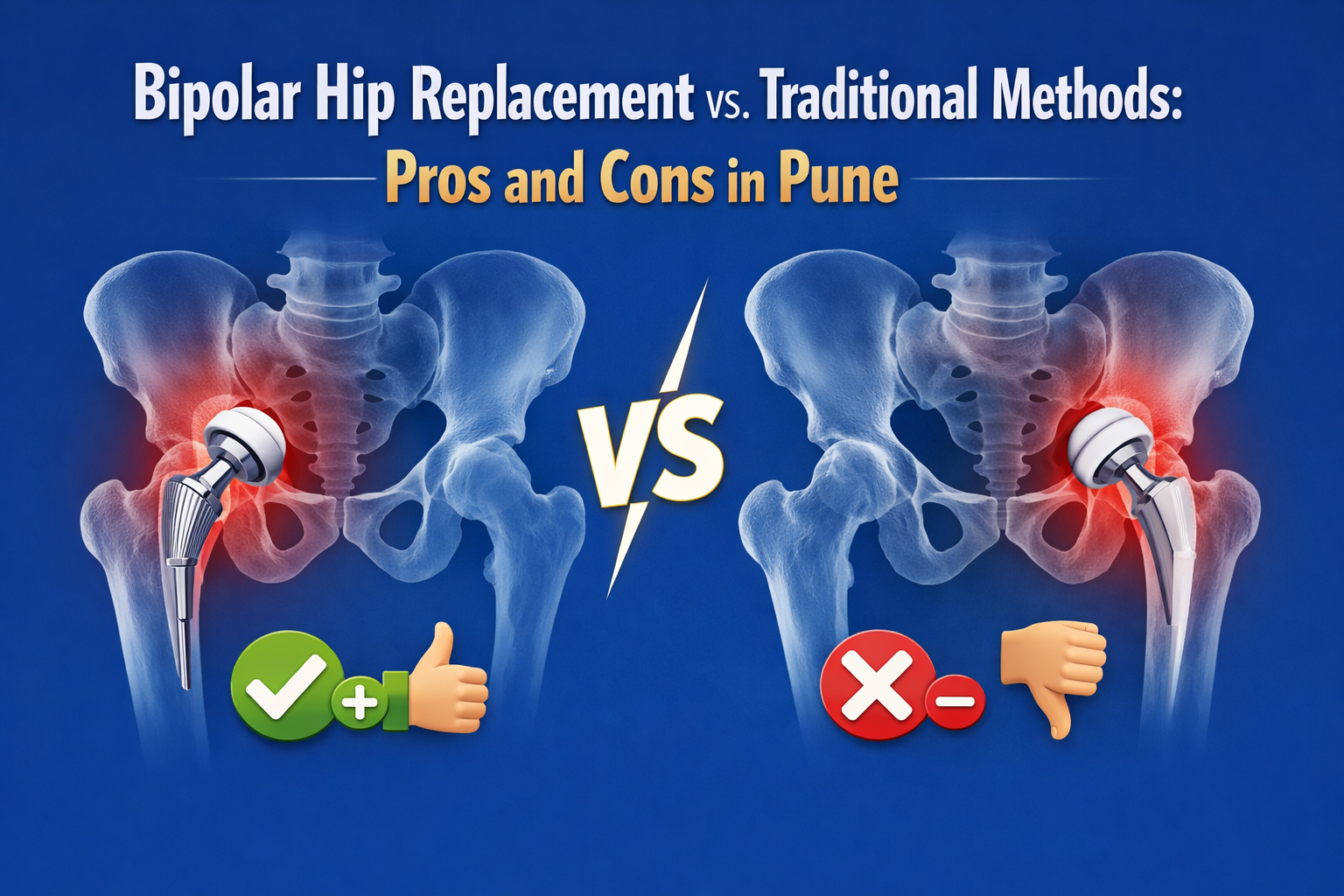
Bipolar Hip Replacement vs. Traditional Methods: Pros and Cons in Pune
Hip pain can significantly affect your daily life, making simple activities like walking, climbing stairs, or standing uncomfortable. When medications, physiotherapy, or lifestyle modifications fail to provide relief, surgery becomes a reliable solution. In Pune, patients often consider bipolar hip replacement in Pune versus traditional hip replacement Pune to decide which approach suits their needs.
Consulting an experienced orthopedic surgeon in Pune, such as Dr Snehal Dalal, ensures you receive a personalized treatment plan tailored to your health, activity level, and long-term mobility goals.
What Is Hip Replacement Surgery?
Hip replacement surgery in Pune involves removing the damaged portions of the hip joint and replacing them with artificial components. This surgery is usually recommended for:
- Severe osteoarthritis
- Rheumatoid arthritis
- Hip fractures
- Avascular necrosis
The primary goal is to reduce pain, restore mobility, and improve quality of life. There are two common types of hip replacement procedures:
- Bipolar Hip Replacement – only the femoral head is replaced.
- Total Hip Replacement – both the femoral head and hip socket are replaced.
Understanding Bipolar Hip Replacement
Bipolar hip replacement in Pune, also known as bipolar hemiarthroplasty, is a partial hip replacement procedure. Only the femoral head is replaced, while the hip socket (acetabulum) remains intact. The implant has two articulating surfaces, allowing smoother movement and reduced friction.
This procedure is particularly recommended for older adults or those with hip fractures. Since it is less invasive than total hip replacement, surgery time is generally shorter, and early recovery is faster. Patients can begin walking and performing light daily activities within days after surgery.
Traditional (Total) Hip Replacement
Total hip replacement in Pune replaces both the femoral head and the socket. This procedure is ideal for patients with advanced arthritis or significant joint degeneration.
Total hip replacement offers a wider range of motion, greater long-term durability, and improved functional outcomes. Although recovery may take slightly longer, total hip replacement provides excellent long-term benefits, especially for active patients.
Key Differences Between Bipolar and Total Hip Replacement
| Feature | Bipolar Hip Replacement | Total Hip Replacement |
| Parts Replaced | Femoral head only | Femoral head + socket |
| Surgery Duration | Shorter | Longer |
| Ideal Candidates | Older adults, fractures | Severe arthritis, active lifestyle |
| Range of Motion | Moderate | High |
| Longevity | Moderate | Long-term |
| Recovery | Faster early recovery | Steady recovery, long-term durability |
Both procedures are effective, but the choice between bipolar hip replacement in Pune and traditional hip replacement Pune depends on your age, activity level, and extent of joint damage.
Advantages of Bipolar Hip Replacement
- Less invasive surgery – smaller incision, reduced surgical time.
- Faster early recovery – patients can start walking sooner.
- Lower early dislocation risk – dual-motion design increases stability.
- Effective for hip fractures – particularly femoral neck fractures in older adults.
Advantages of Total Hip Replacement
- Improved long-term function – replaces both joint surfaces for smoother motion.
- Durable solution – modern implants can last 15–20+ years.
- Suitable for severe arthritis – effective for widespread joint damage.
Considerations and Potential Drawbacks
Bipolar Hip Replacement:
- Less effective if the hip socket is damaged.
- May require additional surgery in the future if the socket wears out.
- Functional improvement might be modest for highly active individuals.
Total Hip Replacement:
- Slightly higher risk of early dislocation.
- Longer surgery and recovery compared with bipolar replacement.
- More invasive, requiring greater bone work during the procedure.
Recovery and Rehabilitation
Recovery depends on your age, overall health, and dedication to physiotherapy.
After bipolar hip replacement in Pune:
- Assisted walking: 1–3 days
- Daily activities: 4–6 weeks
- Full recovery: 3–4 months
After total hip replacement in Pune:
- Assisted walking: 2–5 days
- Daily Activities: 1–2 weeks
- Full Recovery: 1–1.5 months
Physiotherapy is critical for both methods. Strengthening exercises, balance training, and mobility practice improve functional outcomes and reduce the risk of complications.
Choosing the Right Surgeon in Pune
The choice of surgeon plays a major role in the success of hip replacement. Experienced orthopedic surgeons in Pune, like Dr Snehal Dalal, provide comprehensive evaluations and personalized treatment plans.
Consulting Dr Snehal Dalal ensures you receive the right procedure—whether bipolar hip replacement in Pune or total hip replacement in Pune based on your health, lifestyle, and long-term mobility goals. Post-surgery, Dr Snehal Dalal also guides patients through tailored rehabilitation programs to ensure optimal recovery.
When to Consider Each Procedure
Bipolar Hip Replacement:
- Older adults with femoral neck fractures
- Limited activity after surgery
- Preference for a shorter, less invasive procedure
Total Hip Replacement:
- Severe arthritis or damage to both femoral head and socket
- Younger, active patients
- Prioritizing long-term durability and full range of motion
Final Thoughts
Both bipolar hip replacement in Pune and traditional hip replacement Pune are safe, effective, and proven procedures. The best choice depends on your age, activity level, and condition of the hip joint.
Consulting a trusted orthopedic specialist like Dr Snehal Dalal helps patients select the right procedure and recovery plan. With proper surgical care and dedicated rehabilitation, patients regain mobility, reduce pain, and enjoy daily activities comfortably once again.
FAQs: Bipolar vs. Total Hip Replacement in Pune
1. What is the main difference between bipolar and total hip replacement?
Bipolar replaces only the femoral head, while total hip replacement replaces both the femoral head and socket. Bipolar is less invasive with quicker early recovery; total hip replacement offers better long-term durability and range of motion.
2. Who is an ideal candidate for bipolar hip replacement?
Older adults with femoral neck fractures or limited activity who want a shorter, less invasive procedure.
3. How long is recovery for each procedure?
Bipolar: walking in 1–3 days, daily activities in 4–6 weeks, full recovery 3–4 months.
Total hip: walking in 2–5 days, daily activities in 1–2 weeks, full recovery 1–1.5 months. Physiotherapy is important for both.
4. Are there risks associated with either procedure?
Bipolar may be less effective if the socket is damaged and could need future surgery. Total hip replacement has slightly higher early dislocation risk and is more invasive.
5. How to choose the right procedure in Pune?
Consult an experienced surgeon like Dr Snehal Dalal. Choice depends on age, activity level, and hip condition: bipolar for older or less active patients, total hip for younger, active patients with severe arthritis.