


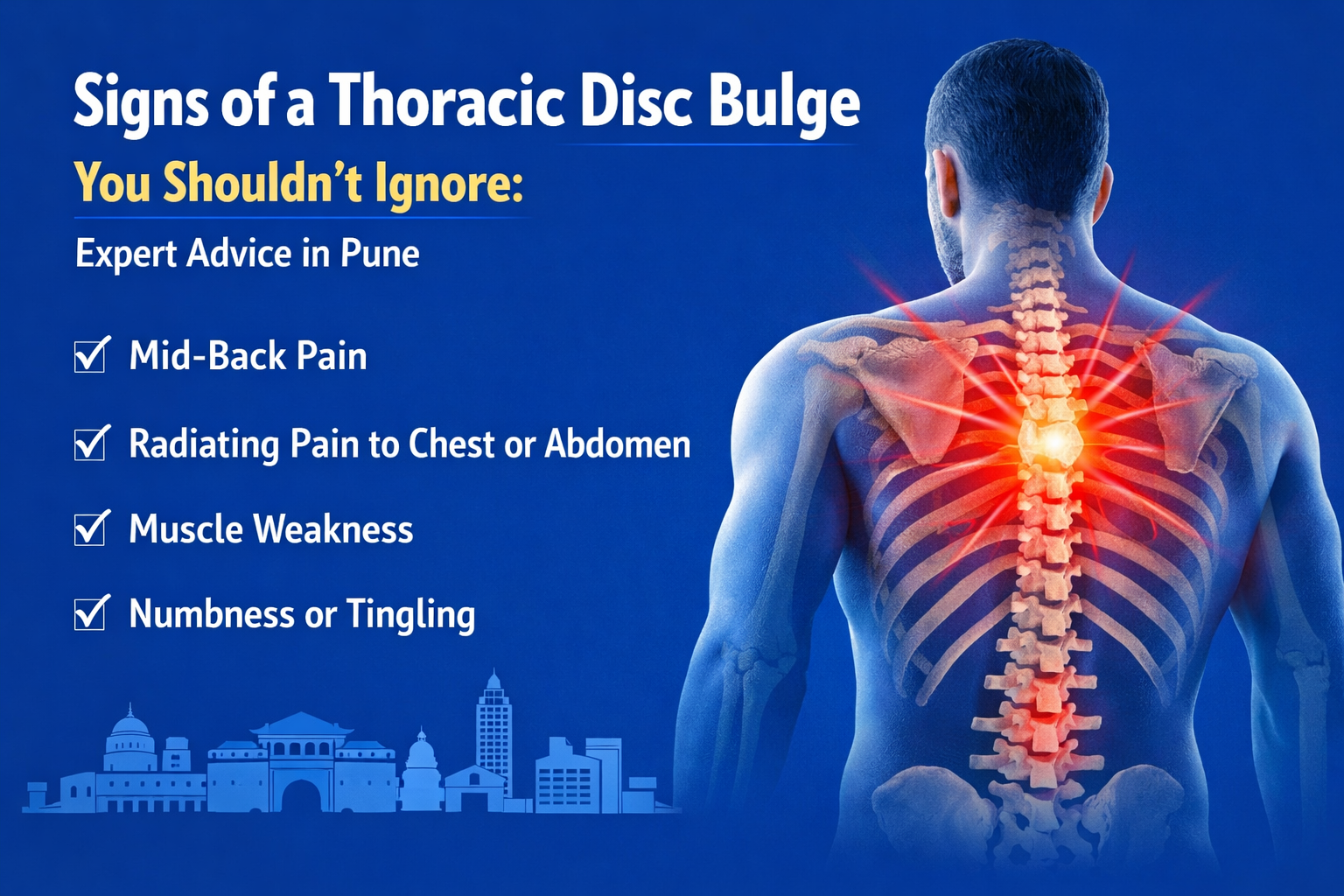
Signs of a Thoracic Disc Bulge You Shouldn’t Ignore: Expert Advice in Pune
Back pain is one of the most common complaints, yet not all back pain comes from poor posture or long hours at a desk. Sometimes, the discomfort originates from the middle of your back, often caused by a Thoracic Disc Bulge. Understanding its signs early can make a huge difference in treatment and recovery.
In Pune, specialists like Dr. Shrikant Dalal emphasize that recognizing thoracic spine disc bulge symptoms early is crucial to prevent long-term complications and guide proper care.
What Is a Thoracic Disc Bulge?
Think of your spine as a stack of jelly-filled doughnuts. Each vertebra is cushioned by a disc that absorbs shock and allows smooth movement. A Thoracic Disc Bulge occurs when one of the discs in the thoracic (middle) region pushes outward. Unlike a full herniation, the disc doesn’t rupture completely but may press on nearby nerves, causing pain or discomfort.
While less common than lower back issues, a thoracic disc bulge can still be a serious source of back pain causes. Recognizing it early, as advised by experts like Dr. Shrikant Dalal, is key to effective management.
Common Signs of a Thoracic Disc Bulge
Early detection starts with recognizing subtle symptoms:
1. Persistent Mid-Back Pain
Pain between the shoulder blades or along the thoracic spine is often the first sign. This pain may feel sharp, burning, or dull, and typically worsens with movement or prolonged sitting.
2. Radiating Pain or Numbness
A bulging disc can press on nerves, causing tingling, numbness, or radiating pain along the ribs or torso.
3. Muscle Weakness
Nerve compression can affect strength, leading to weak back or abdominal muscles. Fatigue during simple activities may also occur.
4. Difficulty Bending or Twisting
Daily movements like twisting, reaching, or bending may become painful, which could indicate a disc herniation in thoracic spine.
5. Posture Changes
A slight forward hunch or stiffness may develop as the body compensates for the pain, potentially causing chronic posture problems.
Common Causes of a Thoracic Disc Bulge
Several factors can lead to a bulging disc:
- Age-related degeneration: Discs naturally lose water content and flexibility over time.
- Poor posture: Long hours at a desk or slouching increase pressure on thoracic discs.
- Heavy lifting or trauma: Sudden strain or accidents can trigger a bulge.
- Sedentary lifestyle: Weak back muscles provide less support, increasing risk.
- Genetics: Family history of spinal problems increases susceptibility.
Understanding the root cause helps in both treatment and prevention.
Treatment Options in Pune
If you notice any of the above symptoms, timely consultation with a spine specialist is essential. Middle back disc bulge treatment in Pune usually starts with conservative approaches.
1. Physical Therapy
Guided exercises strengthen back muscles, improve flexibility, and relieve pressure on the bulging disc.
2. Pain Management
Medications like anti-inflammatories or nerve pain relievers can help. Severe cases may require targeted injections.
3. Lifestyle Adjustments
Ergonomic seating, regular breaks from sitting, and maintaining a healthy weight reduce strain on the middle back.
4. Minimally Invasive Procedures
If conservative treatments fail, surgical options may be recommended to relieve nerve compression while preserving spinal stability.
5. Regular Monitoring
Follow-ups and imaging help track progress and prevent further complications.
For optimal guidance, many patients in Pune seek consultation with experts such as Dr. Shrikant Dalal, who tailor treatment plans based on individual conditions.
Prevention Tips
Preventing a thoracic disc bulge is often simpler than treating one. Consider these tips:
- Maintain good posture while sitting or standing.
- Strengthen core and back muscles with regular exercise.
- Avoid heavy lifting without proper technique.
- Stay active to keep discs healthy.
- Don’t ignore persistent mid-back pain it may indicate a disc issue.
When to Consult a Specialist
Not all back pain requires medical attention, but see a doctor if you experience:
- Severe or worsening mid-back pain
- Tingling, numbness, or weakness in your torso or limbs
- Pain that persists despite rest or medication
- Difficulty performing daily activities
Early consultation ensures proper middle back disc bulge treatment in Pune and prevents long-term complications.
FAQs About Thoracic Disc Bulge
Q1: Can a thoracic disc bulge heal on its own?
Mild cases may improve with rest, exercise, and lifestyle adjustments, but consulting a specialist is recommended.
Q2: How is it diagnosed?
Diagnosis usually involves a physical exam, MRI, and sometimes nerve conduction tests.
Q3: Is surgery always needed?
Surgery is only considered if conservative treatment fails or nerve compression is severe.
Q4: Can exercise worsen a bulge?
Improper exercise can worsen symptoms. Always follow a doctor-prescribed regimen.
Q5: How long is recovery?
Recovery varies, but early treatment often leads to improvement within weeks to months.
Conclusion
A Thoracic Disc Bulge may start subtly, but ignoring symptoms can lead to serious complications. Recognizing thoracic spine disc bulge symptoms, understanding back pain causes, and seeking early treatment ensures better outcomes.
If you notice persistent mid-back discomfort, consult a spine specialist in Pune for proper middle back disc bulge treatment. Early care, as recommended by Dr. Shrikant Dalal, protects your spine and keeps you active and pain-free.