


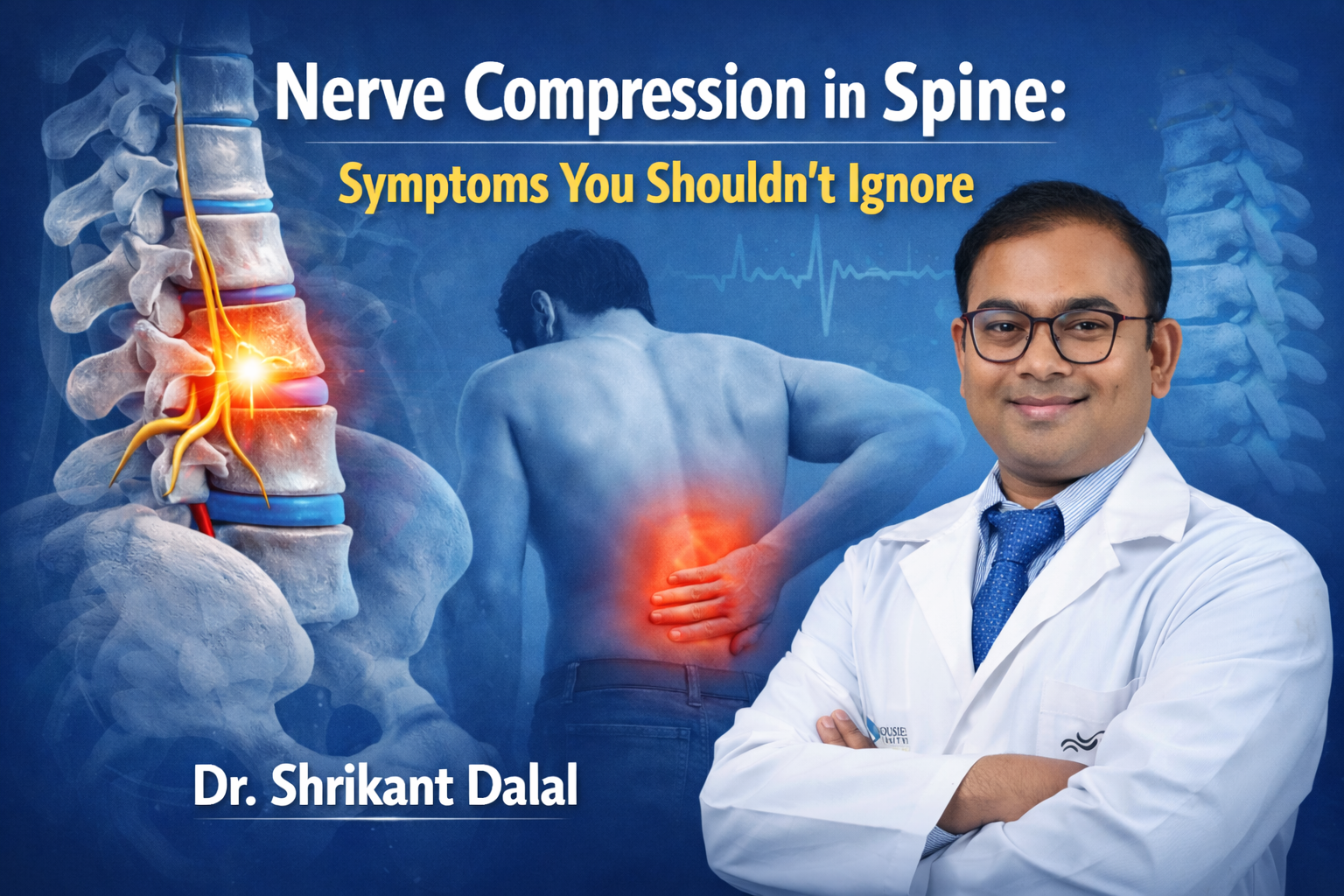
Nerve Compression in Spine: Symptoms You Shouldn’t Ignore
Back pain is something almost everyone experiences at some point. Sometimes it’s just a minor strain that fades away. But other times, the pain lingers, spreads, or starts affecting your daily life. That’s when it may not be “just back pain”—it could be nerve compression in spine.
Think of your spine like a communication highway. Your nerves carry signals between your brain and body. When something presses on these nerves, the signals get disturbed—leading to pain, tingling, or weakness. The earlier you notice the signs, the easier it is to treat.
What is Nerve Compression in Spine?
Nerve compression in spine happens when surrounding structures—like discs, bones, or tissues—put pressure on a spinal nerve. This pressure disrupts normal nerve function.
Imagine a wire being squeezed—signals don’t pass through properly. That’s exactly what happens inside your body.
This condition commonly affects:
- The neck (cervical spine)
- The lower back (lumbar spine)
Common Causes of Nerve Compression
There are several reasons why nerve compression in spine develops:
- Herniated (slipped) discs
- Bone spurs due to aging
- Poor posture and long sitting hours
- Spinal injuries or accidents
- Arthritis affecting the spine
These issues may develop slowly over time, often without obvious warning in the beginning.
Nerve Compression Symptoms You Shouldn’t Ignore
Your body always gives signals. Recognizing early nerve compression symptoms can prevent serious complications.
1. Persistent Pain
Pain that doesn’t go away with rest is a key sign. It may feel sharp, burning, or shooting.
2. Tingling Sensation
A “pins and needles” feeling in arms, hands, legs, or feet often indicates nerve irritation.
3. Numbness
Loss of sensation in certain areas suggests disrupted nerve signals.
4. Muscle Weakness
If your grip weakens or lifting objects becomes difficult, nerves may be affected.
5. Radiating Pain
Pain that travels from your spine to other body parts is a classic sign of spinal nerve pain symptoms.
Pinched Nerve in Spine Symptoms
A pinched nerve is a common type of nerve compression in spine.
Typical pinched nerve in spine symptoms include:
- Sharp pain during movement
- Pain worsening at night
- Burning sensation along the nerve path
- Reduced flexibility
Ignoring these symptoms can lead to long-term damage.
Nerve Compression in Lower Back
The lower back carries most of your body weight, making it highly vulnerable.
Nerve compression in lower back may cause:
- Sciatica (pain radiating down the leg)
- Difficulty standing or walking
- Lower back stiffness
- Pain after sitting for long periods
This condition often worsens gradually if not treated early.
Cervical Nerve Compression Symptoms
When nerve compression affects the neck, it impacts the upper body.
Common cervical nerve compression symptoms include:
- Neck pain and stiffness
- Pain spreading to shoulders or arms
- Tingling in fingers
- Frequent headaches
In severe cases, even simple tasks can become difficult.
When Should You See a Specialist?
Not all back pain is serious—but some signs should never be ignored.
Consult a specialist if:
- Pain lasts more than a few days
- Symptoms are getting worse
- You feel numbness or weakness
- Daily activities are affected
Early diagnosis leads to faster recovery. Experts like Dr. Shrikant Dalal can accurately identify the problem and guide the right treatment plan. Getting timely advice from Dr. Shrikant Dalal can prevent complications and long-term damage.
Spinal Nerve Compression Treatment Options
The good news is that most cases of nerve compression in spine can be treated without surgery.
1. Physiotherapy
Targeted exercises help reduce pressure and strengthen muscles.
2. Medications
Pain relievers and anti-inflammatory medicines ease discomfort.
3. Lifestyle Changes
Improving posture, reducing screen time, and staying active can help.
4. Heat & Cold Therapy
Simple home remedies can reduce swelling and pain.
5. Advanced Treatments
In severe cases, injections or minimally invasive procedures may be required.
Choosing the right spinal nerve compression treatment depends on the severity and underlying cause.
Simple Tips to Prevent Nerve Compression
Prevention is always better than cure. Small daily habits can protect your spine:
- Maintain correct posture while sitting and standing
- Take breaks if you sit for long hours
- Exercise regularly to strengthen core muscles
- Lift heavy objects carefully
- Use ergonomic chairs and supportive mattresses
Think of your spine as the foundation of your body—keep it strong, and everything else works smoothly.
Conclusion
Nerve compression in spine is often ignored until it starts affecting everyday life. What begins as mild discomfort can slowly turn into severe pain, numbness, or weakness if left untreated.
The key is awareness. Recognizing early nerve compression symptoms and taking timely action can prevent serious complications. Simple lifestyle changes, proper care, and expert guidance can make recovery easier and faster.
If symptoms persist, don’t delay seeking help. Consulting a specialist like Dr. Shrikant Dalal ensures the right diagnosis and treatment, helping you get back to a pain-free and active life.
Frequently Asked Questions (FAQs)
1. What are the early signs of nerve compression in spine?
Pain, tingling, numbness, and mild muscle weakness are early signs.
2. Can nerve compression heal naturally?
Mild cases may improve with rest, but persistent symptoms need treatment.
3. Is nerve compression serious?
If ignored, it can lead to long-term nerve damage.
4. How long does recovery take?
It depends on severity—some recover in weeks, others may take longer.
5. What is the best spinal nerve compression treatment?
Physiotherapy, medication, and lifestyle changes are most effective.
6. Can exercise help nerve compression?
Yes, guided exercises can relieve pressure and improve strength.
7. What causes nerve compression in lower back?
Herniated discs, poor posture, and aging are common causes.
8. Are cervical nerve compression symptoms dangerous?
They can become serious if ignored, especially with increasing weakness.
9. When should I see a doctor?
If pain persists or worsens, consult a specialist immediately.
10. Can posture affect nerve compression?
Yes, poor posture is one of the leading causes of spinal nerve issues.