

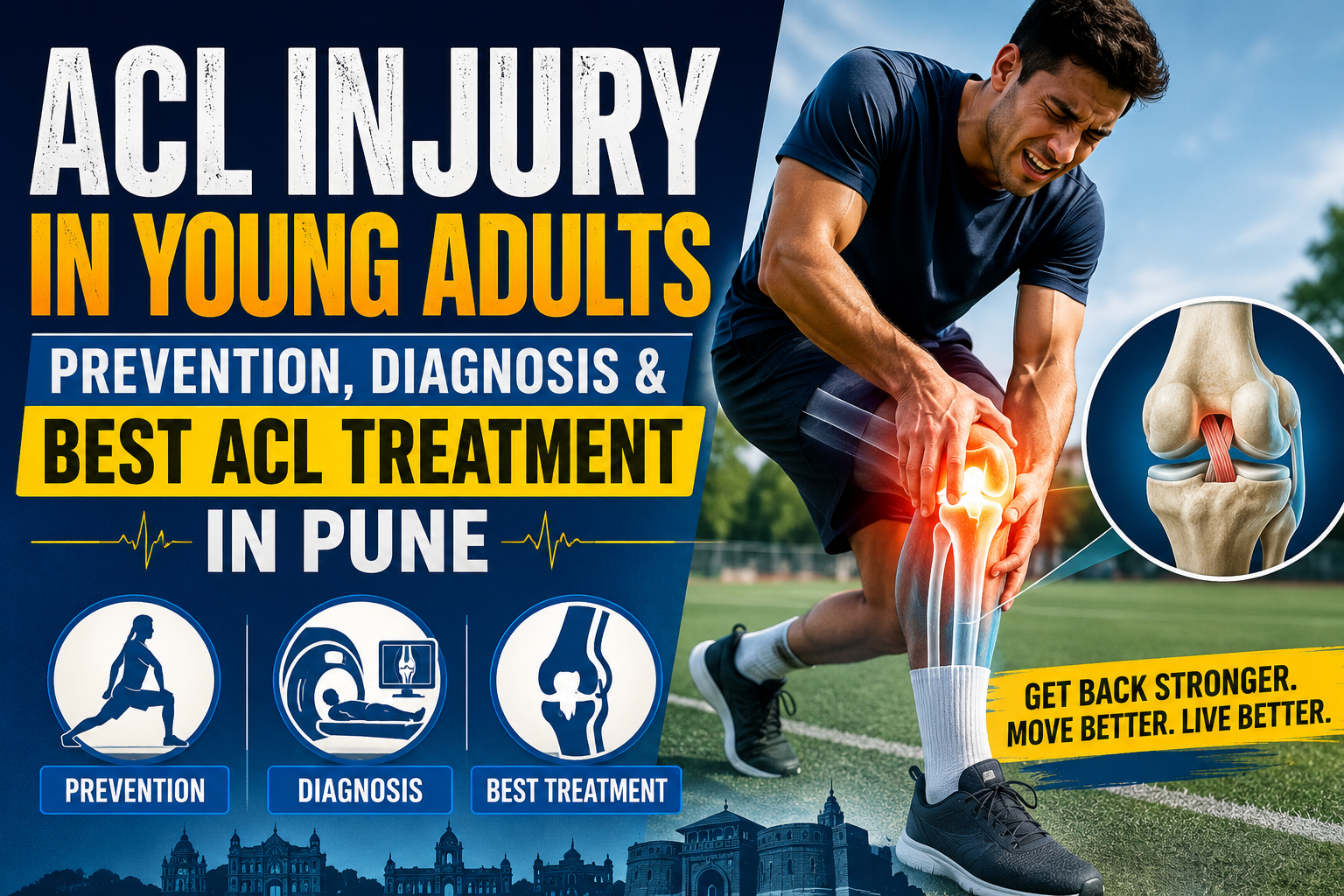
ACL Injury in Young Adults: Prevention, Diagnosis & Best ACL Treatment in Pune
An anterior cruciate ligament (ACL) injury is one of the most common knee injuries affecting young adults, athletes, fitness enthusiasts, and individuals with active lifestyles. Whether you’re a football player, runner, gym enthusiast, or someone who enjoys weekend sports, an ACL tear can significantly impact your mobility, confidence, and long-term knee health.
At Orthos Centre, Pune, Dr. Snehal Dalal, an orthopedic surgeon specializing in sports injuries, arthroscopy, and joint preservation, offers evidence-based diagnosis, advanced ACL reconstruction surgery, and personalized rehabilitation plans to help patients return safely to their active lives. Dr. Dalal’s practice focuses on arthroscopic procedures for sports injuries, ligament repair, and joint-preserving care.
This comprehensive guide explains everything you need to know about ACL injury prevention, symptoms, diagnosis, treatment options, recovery timelines, and when to consult an orthopedic specialist in Pune.
What is an ACL Injury?
The anterior cruciate ligament (ACL) is one of the four major ligaments that stabilize the knee joint. It connects the thigh bone (femur) to the shin bone (tibia) and prevents excessive forward movement and rotational instability.
When excessive twisting, pivoting, or sudden impact occurs, the ACL may stretch or tear partially or completely.
ACL injuries are particularly common among people aged 15 to 35 years, especially those participating in the following:
- Football
- Cricket
- Basketball
- Badminton
- Kabaddi
- Volleyball
- Running
- CrossFit
- Gym workouts
- Trekking
Why Are Young Adults at Higher Risk of ACL Injuries?
Young adults participate in high-impact sports and physically demanding activities that place repeated stress on the knee.
Common risk factors include:
- Sudden change in direction
- Pivoting while the foot is planted
- Landing incorrectly after a jump
- Direct knee trauma
- Poor muscle strength
- Weak core stability
- Previous knee injury
- Inadequate warm-up
- Improper sports technique
Research also shows that many ACL injuries occur without direct contact, often during sudden deceleration or landing movements.
Common ACL Injury Symptoms
An ACL tear usually causes immediate symptoms.
Typical signs include the following:
- Loud “pop” at the time of injury
- Sudden knee pain
- Rapid swelling
- Knee instability
- Difficulty walking
- Reduced range of motion
- Feeling that the knee “gives way”
- Pain while climbing stairs
- Difficulty returning to sports
If you experience these symptoms after a sports injury, early orthopedic evaluation is important.
How is an ACL injury diagnosed?
Accurate diagnosis is essential for planning the right treatment.
Dr. Snehal Dalal typically evaluates ACL injuries through the following:
Medical History
Understanding how the injury occurred.
Physical Examination
Clinical tests may include:
- Lachman Test
- Pivot Shift Test
- Anterior Drawer Test
MRI Scan
MRI remains the gold standard for confirming the following:
- Partial ACL tear
- Complete ACL rupture
- Meniscus injury
- Cartilage damage
- Associated ligament injuries
X-rays
Used to rule out fractures or bone injuries.
ACL Injury Grades
Grade 1
- Mild stretching
- Stable knee
- Conservative treatment usually sufficient
Grade 2
- Partial ligament tear
- Moderate instability
- Individualized treatment required
Grade 3
- Complete ACL tear
- Significant instability
- Surgery is often recommended for active individuals who wish to return to pivoting sports.
Can You Walk with a Torn ACL?
Yes.
Many patients can walk after an ACL tear once the initial pain subsides.
However, walking does not mean the ligament has healed.
Continuing sports without proper treatment may increase the risk of the following:
- Meniscus tears
- Cartilage damage
- Recurrent knee instability
- Early osteoarthritis
Professional assessment is recommended before returning to sports.
Lorem ipsum dolor sit amet, consectetur adipiscing elit. Ut elit tellus, luctus nec ullamcorper mattis, pulvinar dapibus leo.
Best Treatment for ACL Injury in Young Adults
Treatment depends on:
- Age
- Activity level
- Degree of instability
- MRI findings
- Associated meniscus injury
- Sporting goals
Non-Surgical ACL Treatment
Suitable for:
- Partial tears
- Low-demand individuals
- Stable knees
Treatment may include:
- Physiotherapy
- Strengthening exercises
- Knee brace
- Activity modification
- Pain management
ACL Reconstruction Surgery
Young adults with complete ACL tears and ongoing instability often benefit from arthroscopic ACL reconstruction, a minimally invasive procedure in which the torn ligament is replaced with a graft. The goal is to restore knee stability and enable a safe return to sports after structured rehabilitation. Treatment decisions should always be individualized after clinical examination and imaging.
Potential benefits include the following:
- Improved knee stability
- Better return-to-sport potential
- Reduced episodes of the knee giving way
- Protection of other knee structures when combined with rehabilitation
Recovery After ACL Surgery
Recovery occurs in phases.
Week 1–2
- Pain control
- Swelling reduction
- Walking with support
Weeks 3–6
- Regaining knee movement
- Muscle strengthening
Months 2–4
- Balance training
- Functional rehabilitation
Months 6–9
- Sports-specific training
- Return-to-play assessment
Recovery varies from person to person and should be guided by your orthopedic surgeon and physiotherapist.
How to Prevent ACL Injuries
Although not every injury can be prevented, risk can be reduced through:
- Proper warm-up
- Neuromuscular training
- Strengthening the quadriceps, hamstrings, and gluteal muscles
- Core stability exercises
- Correct landing techniques
- Balance and agility training
- Wearing appropriate footwear
- Avoiding sudden increases in training intensity
Preventive exercise programs have been shown to lower ACL injury risk in many athletic populations.
When Should You See an Orthopedic Specialist?
Seek evaluation if you experience:
- Knee instability
- Persistent swelling
- Difficulty walking
- Locking of the knee
- Recurrent sports injuries
- Pain lasting more than a few days after injury
Early diagnosis can help prevent additional damage to the meniscus and cartilage.
Why Choose Dr. Snehal Dalal for ACL Treatment in Pune?
Patients seeking ACL treatment in Pune often look for the following:
- Accurate diagnosis
- Arthroscopic expertise
- Personalized treatment plans
- Structured rehabilitation guidance
- Comprehensive orthopedic care
Dr. Snehal Dalal practices at Orthos Centre in Pune and focuses on sports injuries, arthroscopy, ligament repair, joint preservation, and orthopedic care.
Frequently Asked Questions (FAQ)
What are the first signs of an ACL injury?
A popping sensation, rapid swelling, pain, and knee instability are common early signs.
Is surgery always necessary for an ACL tear?
Not always. Partial tears or stable knees may be managed conservatively, while many active patients with complete tears may benefit from reconstruction.
How long does ACL recovery take?
Recovery varies, but many patients require several months of rehabilitation before returning to sports.
Can an ACL tear heal without surgery?
Complete ACL tears generally do not heal on their own. Some partial tears may improve with rehabilitation, depending on the individual case.
Which doctor should I consult for an ACL injury in Pune?
Consult an orthopedic surgeon with experience in sports injuries and arthroscopic knee procedures for evaluation and treatment.
Book an ACL Consultation in Pune
If you’ve experienced a knee injury or instability or suspect an ACL tear, timely evaluation is important. Dr. Snehal Dalal provides comprehensive assessment and individualized treatment plans for ACL injuries, helping patients return to daily activities and sports safely through evidence-based orthopedic care.
