

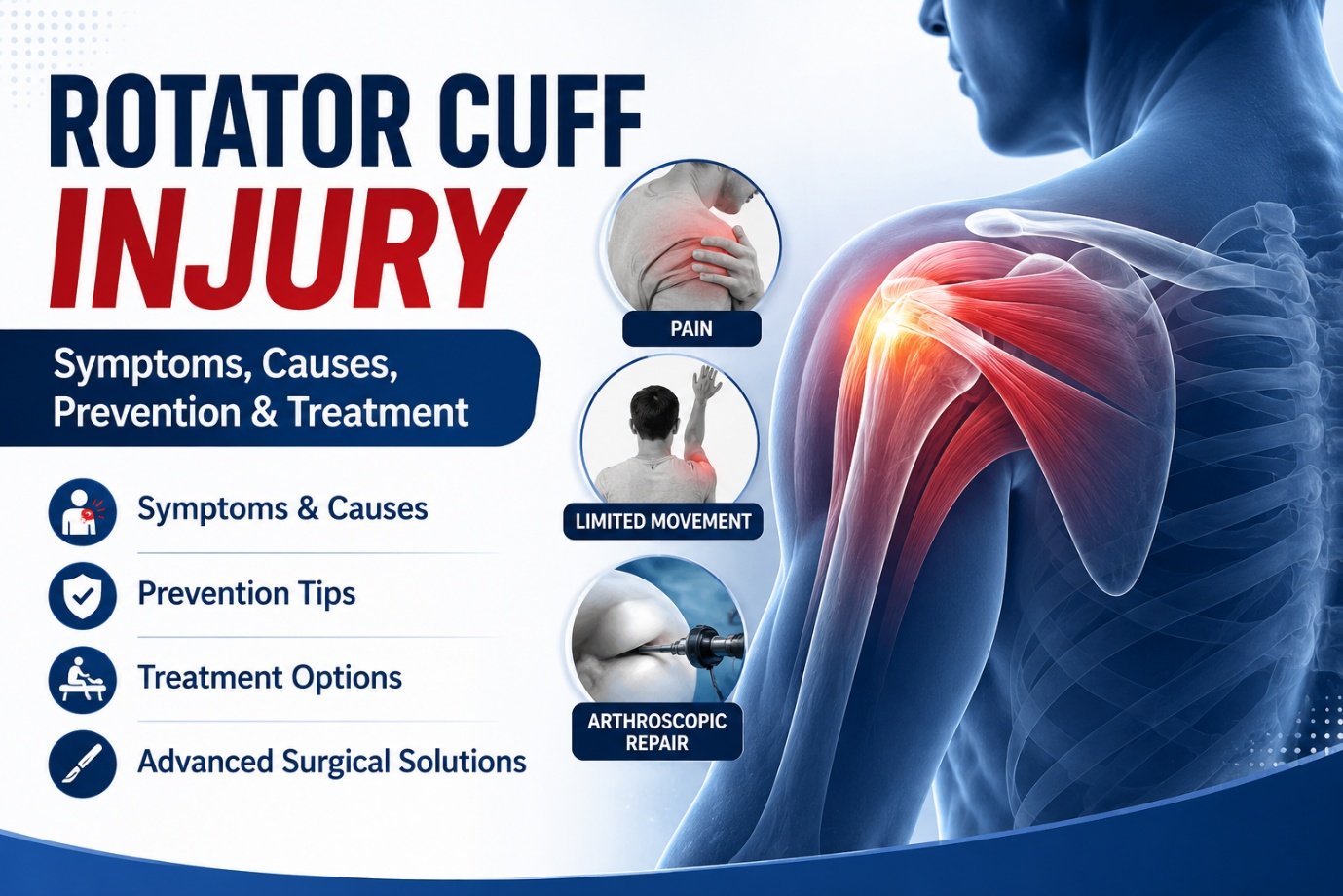
Rotator Cuff Injury: Symptoms, Causes, Prevention & Treatment
Rotator cuff injuries are a common cause of shoulder pain and discomfort, especially among athletes and individuals involved in repetitive overhead activities. These injuries can affect everyday movements and make simple tasks like reaching, lifting, or dressing difficult. In this guide, Dr. Shrikant Dalal explains the symptoms, common causes, prevention methods, and treatment options for rotator cuff injuries.
Symptoms of a Rotator Cuff Injury
- Shoulder pain: Dull or deep pain in the shoulder that may worsen while lifting objects, reaching overhead, or moving the arm. Pain can also become more noticeable at night, particularly when lying on the affected shoulder.
- Weakness: Reduced shoulder strength can make everyday activities such as lifting objects, combing hair, or reaching for items on higher shelves difficult.
- Limited range of motion: Stiffness or restricted shoulder movement may make it difficult to move the arm freely.
- Clicking or cracking sensation: A popping, clicking, or cracking sensation while moving the shoulder can sometimes be associated with rotator cuff damage.
- Swelling and tenderness: Tenderness around the shoulder and localized swelling may occur, particularly following physical activity or an injury.
About Dr Shrikant Dalal
Common Causes of Rotator Cuff Injuries
Rotator cuff injuries can develop gradually due to repeated stress and wear or may occur suddenly following an accident or trauma.
Some important causes are:
- Repetitive stress: Repeated overhead movements in sports such as swimming, tennis, and baseball, or occupations such as painting and carpentry, can gradually place excessive stress on the rotator cuff tendons.
- Acute injury: A sudden injury, such as lifting a heavy object, falling on an outstretched arm, or experiencing a direct impact, can result in a partial or complete rotator cuff tear.
- Age-related degeneration: As people age, the rotator cuff tendons can naturally become weaker and more susceptible to tears, particularly after the age of 40.
- Poor posture: Rounded shoulders and improper posture can place additional strain on the shoulder muscles and tendons, increasing the risk of injury over time.
- Bone spurs: Bony growths around the shoulder joint can rub against the rotator cuff tendons, resulting in irritation, inflammation, and damage.
- Diabetes: Diabetes may affect the strength and health of muscles and tendons, potentially increasing the risk of rotator cuff problems.
Preventing Rotator Cuff Injuries
Prevention is particularly important for athletes and individuals whose daily activities involve frequent shoulder movements. Some effective preventive measures include:
- Strengthening exercises: Regular exercises that target the rotator cuff and surrounding shoulder muscles can help improve joint stability and reduce the risk of injury.
- Flexibility training: Stretching exercises can help maintain shoulder flexibility and reduce unnecessary strain on the muscles and tendons.
- Proper lifting techniques: Using appropriate lifting and movement techniques can minimise excessive stress on the shoulder.
- Warm-up before exercise: A proper warm-up prepares the muscles and joints for physical activity and may help reduce the risk of injury.
Improve posture: Maintaining good posture helps keep the shoulder properly aligned and can reduce unnecessary pressure on the shoulder structures.
Treatment Options
If shoulder pain or weakness is suspected to be related to a rotator cuff injury, timely evaluation is important. Treatment depends on the type and severity of the injury, the patient’s age, activity level, and overall shoulder condition.
1. Conservative Treatment
- Physical therapy: A customised rehabilitation program can help improve shoulder strength, flexibility, movement, and function.
- Medication: Pain-relieving or anti-inflammatory medications may be recommended to manage pain and inflammation when appropriate.
- Rest and ice: Reducing activities that aggravate the shoulder and applying ice may help manage pain and inflammation, particularly in the early stages of an injury.
2. Arthroscopic Surgery
- Minimally invasive: Arthroscopic surgery uses small incisions and a camera to examine and repair damaged structures within the shoulder.
- Rotator cuff repair: Torn tendons can be repaired when surgery is considered appropriate based on the severity and type of tear.
- Recovery benefits: Compared with traditional open procedures, arthroscopic techniques generally involve smaller incisions and may help reduce surgical trauma.
3. Reverse Shoulder Replacement
- For severe cases: Reverse shoulder replacement may be considered for certain patients with large, irreparable rotator cuff tears, particularly when significant shoulder dysfunction or arthritis is also present.
- Reverse anatomy: The normal ball-and-socket arrangement of the shoulder is reversed, allowing the deltoid muscle to assist with shoulder movement when the rotator cuff is severely damaged.
- Improved function: The procedure can help reduce pain and improve shoulder movement and daily function in appropriately selected patients.
Looking for Treatment for a Rotator Cuff Injury?
Persistent shoulder pain, weakness, or restricted movement should not be ignored. Early assessment can help identify the cause of symptoms and determine the most appropriate treatment approach.
Consult Dr. Shrikant Dalal for professional evaluation and personalised treatment for rotator cuff and shoulder conditions.
