

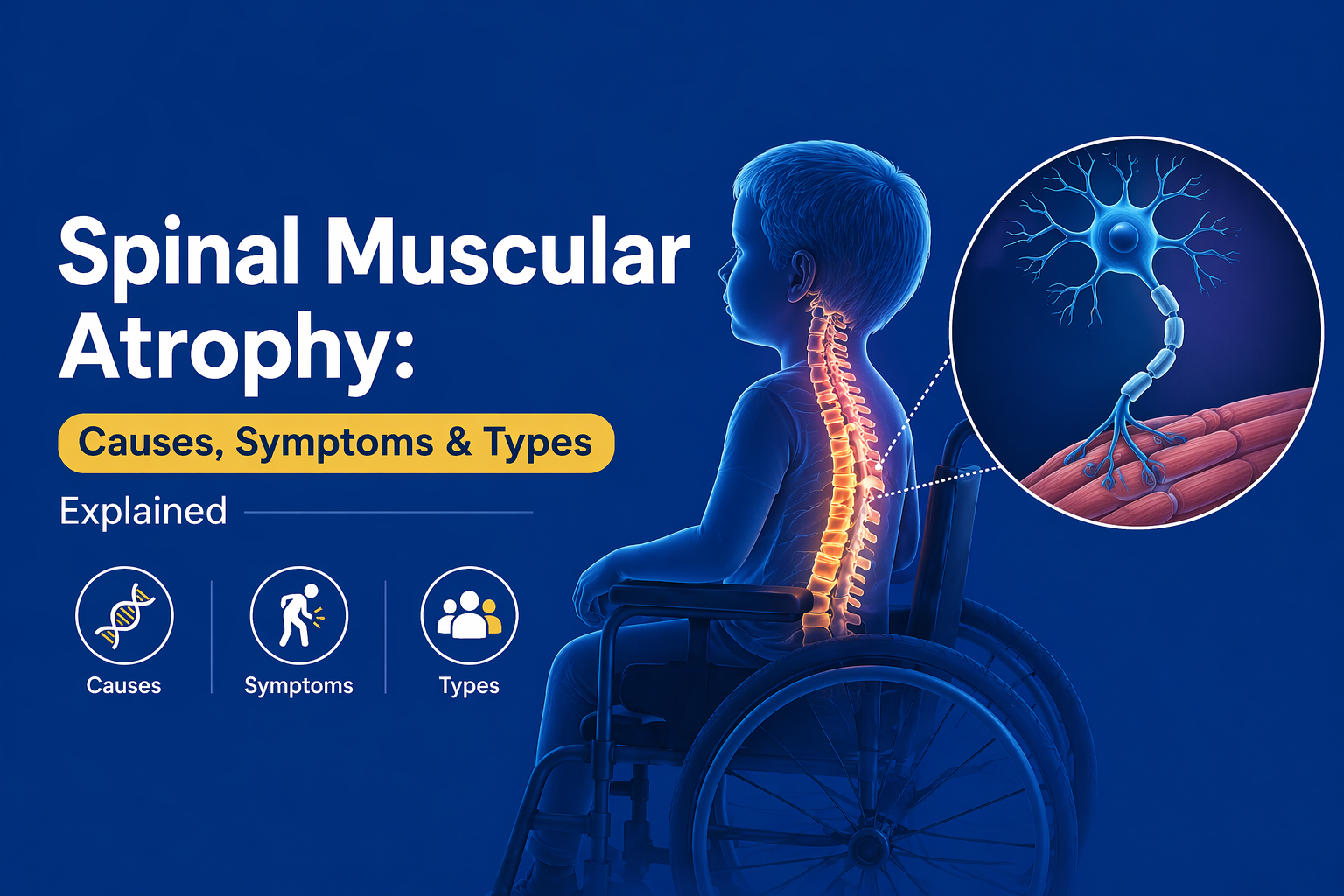
Spinal Muscular Atrophy: Causes, Symptoms & Types Explained
Spinal Muscular Atrophy (SMA) is a rare genetic neuromuscular disorder that affects motor neurons in the spinal cord and brainstem. It leads to progressive muscle weakness, impacting mobility, daily activities, and overall quality of life. Early recognition and understanding of Spinal Muscular Atrophy causes, symptoms, and types are crucial for timely intervention and long-term management.
Dr. Shrikant Dalal, a neuromuscular specialist with extensive experience treating SMA patients, emphasizes that early awareness and personalized care plans significantly improve patient outcomes and life expectancy.
What Causes Spinal Muscular Atrophy?
The root cause of SMA is a mutation in the SMN1 gene, which produces the survival motor neuron (SMN) protein. This protein is essential for the proper functioning of motor neurons, which control voluntary muscles. When the SMN protein is insufficient, motor neurons gradually degenerate, leading to muscle weakness.
Spinal Muscular Atrophy causes are inherited in an autosomal recessive pattern. This means a child must inherit the defective gene from both parents to develop the disease. While the genetic nature of SMA cannot be prevented, early testing allows families to plan and seek treatment proactively.
“In my experience, families who pursue early genetic counseling and testing can make a meaningful difference in disease management,” says Dr. Shrikant Dalal. “Early interventions, even before symptoms appear, can improve mobility and quality of life.”
Recognizing SMA Symptoms
Recognizing Spinal Muscular Atrophy symptoms early is essential for effective care. Symptoms vary depending on the type and age of onset, and can range from subtle weakness to significant motor limitations. Common signs include:
- Muscle weakness, particularly in the arms, legs, and trunk
- Delayed motor milestones, such as difficulty sitting, crawling, or walking
- Poor head control or “floppy” limbs (hypotonia)
- Respiratory difficulties, including shallow breathing or frequent infections
- Difficulty swallowing or feeding problems
For infants, SMA symptoms in children may initially appear subtle. Weak crying, difficulty holding the head up, or trouble grasping objects can indicate early disease. Timely consultation with a neurologist is critical to confirm diagnosis and initiate early supportive care.
Early detection allows families to implement physical therapy, respiratory support, and nutritional interventions, which can make a tangible difference in the child’s development and quality of life.
Types of Spinal Muscular Atrophy
SMA is classified into four main types based on age of onset and severity:
Type 1 (Werdnig-Hoffmann Disease)
Type 1 is the most severe form, appearing in infants under six months. Babies may have severe muscle weakness, difficulty swallowing, and breathing challenges. Without intervention, life expectancy can be significantly reduced. Advances in gene therapy and SMN-enhancing medications have dramatically improved outcomes for children with Type 1 SMA.
Type 2
Type 2 usually develops between 6 and 18 months. Children can sit independently but often cannot walk without assistance. Muscle weakness progresses gradually, and respiratory support may be necessary. Regular physiotherapy and occupational therapy are essential to maintain mobility and prevent complications.
Type 3 (Kugelberg-Welander Disease)
Type 3 develops after 18 months of age, sometimes appearing in adolescence. Children may initially walk independently but lose mobility over time. Continuous therapy, assistive devices, and exercise programs can help maintain strength, independence, and social engagement.
Type 4
Type 4 SMA is adult-onset and progresses slowly. Symptoms include mild muscle weakness and tremors. Many adults maintain an active lifestyle with consistent physical therapy, exercise, and medical monitoring. Lifestyle modifications and supportive care can significantly improve daily function and quality of life.
Diagnosis and Treatment
SMA disease is diagnosed using a combination of clinical assessment, genetic testing, and electromyography (EMG). Early diagnosis is critical for accessing timely treatment and improving long-term outcomes.
Treatment approaches include:
- Medications that increase SMN protein production
- Physical therapy to maintain strength, mobility, and flexibility
- Respiratory support for severe cases
- Nutritional guidance to ensure growth, energy, and overall health
“A multidisciplinary approach is essential,” explains Dr. Shrikant Dalal. “Neurologists, physiotherapists, nutritionists, and respiratory specialists all contribute to the effective management of SMA, helping patients live fuller, healthier lives.”
Early intervention not only slows disease progression but also supports the child’s development and independence. Families often report a sense of empowerment when they actively participate in therapy and care plans.
Living with SMA
Although SMA is a lifelong condition, patients can lead meaningful and fulfilling lives. Families are encouraged to engage in support groups, educational programs, and counseling to navigate the emotional and practical challenges of the disease.
Assistive devices, adaptive strategies, and structured therapy routines can help children and adults achieve independence and maintain confidence. With advances in gene therapy and SMA-specific medications, many patients are living longer, healthier lives than ever before.
Conclusion
Spinal Muscular Atrophy is a complex neuromuscular disorder that affects individuals differently depending on type and severity. Awareness of causes, symptoms, and types allows families and healthcare providers to intervene early, improving outcomes and quality of life.
With guidance from experts like Dr. Shrikant Dalal, patients can access personalized care, supportive therapies, and multidisciplinary management to maximize mobility and independence. Early recognition, proactive care, and ongoing support are essential to living well with SMA.
FAQs About Spinal Muscular Atrophy
Q1: Can SMA be cured?
Currently, there is no complete cure, but therapies and medications can slow progression and improve quality of life.
Q2: What are the early signs of SMA in children?
Delayed motor milestones, weak muscles, poor head control, and difficulty holding objects are common early indicators.
Q3: How is SMA diagnosed?
Through physical examination, genetic testing for SMN1 mutations, and sometimes EMG tests.
Q4: How many types of SMA exist?
There are four types: Type 1, 2, 3, and 4, classified by age of onset and severity.
Q5: Can SMA patients live normal lives?
With early detection, therapy, and multidisciplinary care, many patients lead active, independent, and meaningful lives.