


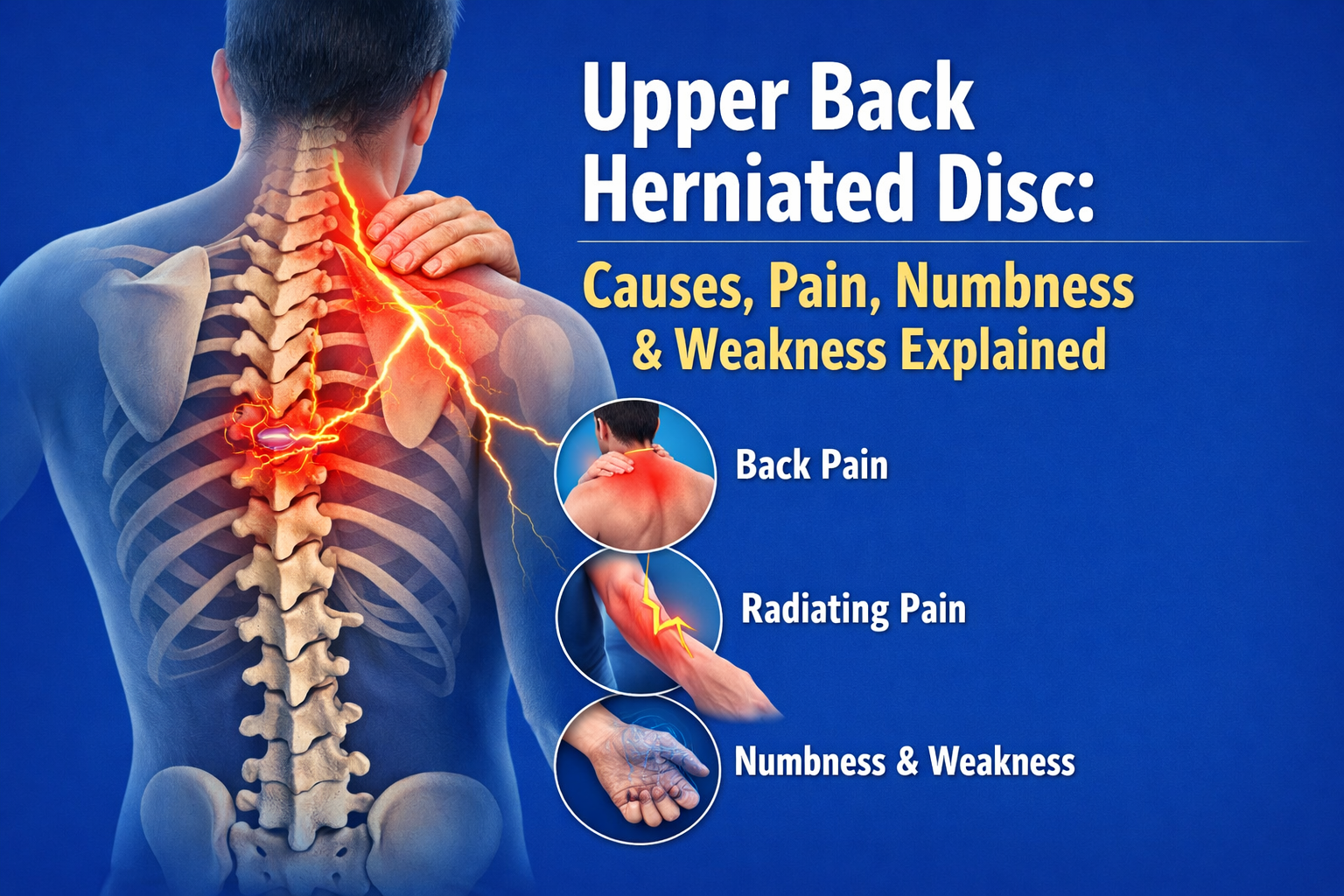
Upper Back Herniated Disc: Causes, Pain, Numbness & Weakness Explained
An upper back herniated disc is a spine condition that develops when a disc in the thoracic (upper back) region weakens or slips out of place and presses on nearby nerves. This pressure can cause pain, numbness, tingling, and even muscle weakness.
Although thoracic disc problems are less common than neck or lower back issues, they can still be serious because they may affect chest, ribs, and upper body function. In clinical practice, specialists like Dr. Shrikant Dalal often highlight that early diagnosis is key to avoiding long-term nerve complications.
Understanding the Spine Anatomy
The spine is divided into three main regions:
- Cervical spine (neck)
- Thoracic spine (upper and mid back)
- Lumbar spine (lower back)
Between each vertebra lies a soft disc that acts as a shock absorber. These discs help the spine move smoothly and prevent bone friction. When a disc in the thoracic area gets damaged, it can lead to an upper back spine disc problem affecting nerves and surrounding muscles.
Causes of Upper Back Herniated Disc
Several factors can lead to this condition:
Age-related degeneration
Discs naturally lose hydration and flexibility over time.
Injury or trauma
Sudden accidents or falls may damage spinal discs.
Poor posture and long sitting hours
Slouching or sitting for long periods increases pressure on the upper spine.
Heavy lifting or sudden strain
Incorrect lifting technique can trigger disc injury.
These are commonly seen mid back herniated disc causes in patients.
Symptoms of Upper Back Herniated Disc
Common upper back disc herniation symptoms include:
- Persistent upper back pain
- Pain radiating to chest or ribs
- Numbness or tingling sensation
- Muscle weakness in arms or torso
- Stiffness and limited movement
Pain Patterns & Nerve Compression Effects
When a disc presses on a nerve, it disrupts normal nerve signals.
This may lead to:
- Sharp or burning pain
- Referred pain in chest or abdomen
- Tingling or “pins and needles” feeling
These are strong signs of upper back nerve compression symptoms. Unlike muscle pain, disc pain often spreads and does not fully improve with rest.
Risk Factors
You may be at higher risk if you have:
- Sedentary lifestyle
- Excess body weight
- Poor posture habits
- Weak back muscles
- Previous spine injuries
How It is Diagnosed
Doctors diagnose this condition using:
- Physical examination
- MRI scan for detailed imaging
- Neurological testing
These help confirm a thoracic spine disc bulge or herniation.
8. Treatment Options
Treatment depends on severity:
Non-surgical treatment
- Pain medications
- Physiotherapy
- Rest and posture correction
Pain management
Heat therapy and guided movement exercises help reduce stiffness.
Steroid injections
Used when inflammation and pain are moderate to severe.
Surgery
Recommended only in severe cases with nerve damage.
As per clinical guidance shared by Dr. Shrikant Dalal, most patients improve with early herniated disc in upper back treatment without surgery.
Physiotherapy & Recovery
Physiotherapy helps restore mobility and strength through:
- Posture correction exercises
- Core strengthening routines
- Stretching for flexibility
- Lifestyle modifications
Regular practice helps prevent recurrence.
Complications if Left Untreated
If ignored, it may lead to:
- Chronic upper back pain
- Severe nerve compression
- Reduced mobility
- Long-term muscle weakness
Prevention Tips
Simple habits that protect your spine:
- Maintain correct posture
- Use ergonomic seating
- Exercise regularly
- Avoid heavy strain on back
- Take breaks during long sitting hours
When to See a Doctor
Seek medical help if you experience:
- Persistent or worsening pain
- Increasing numbness or weakness
- Difficulty in balance or coordination
Conclusion
An upper back herniated disc can affect daily life, but early diagnosis and proper treatment can significantly improve outcomes. With timely care, physiotherapy, and lifestyle correction, most people recover well and return to normal activity.
Experts like Dr. Shrikant Dalal emphasize that early intervention is the key to preventing long-term nerve damage.
FAQs
1. What is an upper back herniated disc?
It is a condition where a spinal disc in the upper back slips or ruptures and presses on nearby nerves, causing pain and neurological symptoms.
2. What are the main symptoms of a thoracic disc herniation?
Common symptoms include upper back pain, chest or rib pain, numbness, tingling, and muscle weakness.
3. Is upper back herniated disc dangerous?
It can become serious if left untreated, as it may lead to nerve compression and long-term weakness.
4. Can a herniated disc in the upper back heal without surgery?
Yes, most cases improve with physiotherapy, medications, and posture correction.
5. What causes upper back disc problems?
Common causes include aging, poor posture, heavy lifting, injury, and sedentary lifestyle.
6. How is it diagnosed?
It is diagnosed through physical examination, MRI scans, and neurological tests.
7. What is the best treatment for upper back herniated disc?
Non-surgical treatments like physiotherapy, pain management, and lifestyle changes are usually the first choice.
You have not enough Humanizer words left. Upgrade your Surfer plan.