

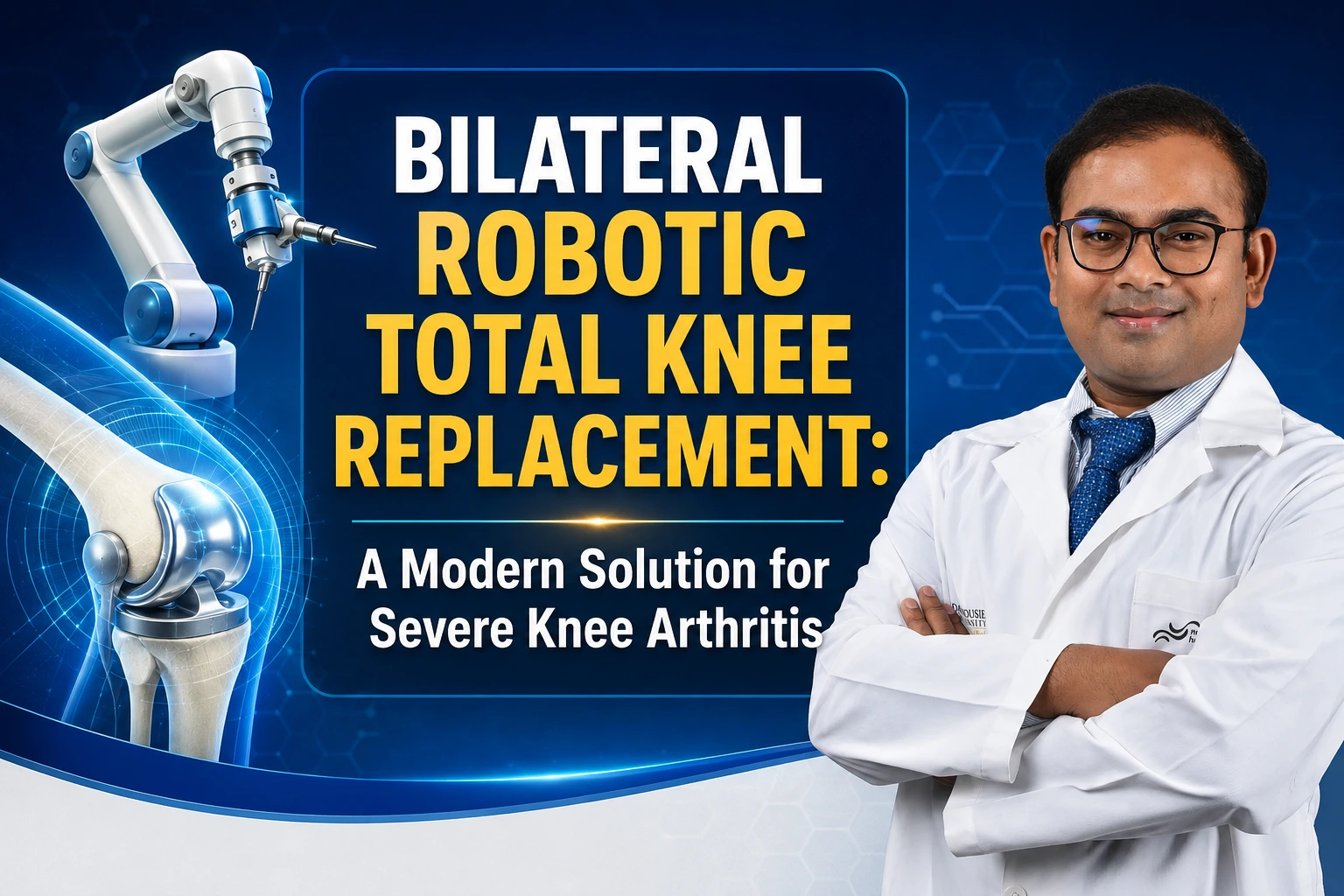
Bilateral Robotic Total Knee Replacement: A Modern Solution for Severe Knee Arthritis
Knee pain can slowly take away a person’s independence. Simple activities such as climbing stairs, walking to the market, or even standing for a few minutes become exhausting when both knees are affected by advanced arthritis. For many patients, medicines and physiotherapy provide temporary relief, but when the damage becomes severe, surgery becomes the most effective option.
Today, Bilateral Robotic Total Knee Replacement is transforming the way knee replacement surgeries are performed. With robotic precision, advanced planning, and improved implant positioning, patients are experiencing better mobility, reduced pain, and faster recovery.
At Orthos Centre, Dr Shrikant Dalal focuses on advanced orthopaedic solutions that help patients return to an active and pain free life with confidence.
Understanding Bilateral Robotic Total Knee Replacement
Bilateral Robotic Total Knee Replacement is a procedure where both damaged knee joints are replaced during the same surgical session using robotic assisted technology. This approach is especially beneficial for patients suffering from severe osteoarthritis in both knees.
Unlike conventional surgery, robotic assisted knee replacement allows the surgeon to create a highly accurate surgical plan based on the patient’s anatomy. The robotic system helps in precise bone preparation and implant placement, improving alignment and joint balance.
This advanced technique is widely preferred for patients who want a long term solution for chronic knee pain and stiffness.
What Makes Robotic Knee Replacement Different?
Traditional knee replacement surgery relies heavily on manual alignment techniques. In robotic knee replacement surgery, advanced imaging and robotic guidance provide a more personalized approach.
Benefits include:
- Greater surgical precision
- Better implant positioning
- Reduced damage to surrounding tissues
- Improved knee function
- Faster rehabilitation
- Enhanced long term implant performance
Patients undergoing Bilateral Robotic Total Knee Replacement often experience smoother movement and improved confidence while walking after recovery.
Common Symptoms of Advanced Knee Osteoarthritis
Many patients delay treatment for years, hoping the pain will improve on its own. However, advanced osteoarthritis can severely affect quality of life.
Signs that may indicate the need for bilateral knee replacement surgery include:
- Persistent pain in both knees
- Difficulty walking or climbing stairs
- Knee swelling and stiffness
- Reduced range of motion
- Grinding sensation in the joints
- Disturbed sleep due to pain
- Dependence on pain medications
If these symptoms are affecting daily activities, consultation with a knee replacement specialist becomes important.
Patient Case Study
Patient Profile
Name: Siddhesh Kumar
Age: 61 years
Diagnosis: Bilateral Osteoarthritis Knee
Primary Complaints
- Severe bilateral knee pain
- Increased difficulty walking
- Swelling and movement limitation
Hospital Details
Hospital: Office No. 9, 1st Floor, Prime Rose Mall Ln, Baner Gaon, Baner, Pune, Maharashtra 411069
Treating Surgeon: Dr. Shrikant Dalal
Surgery: Bilateral Robotic Total Knee Replacement
Date of Surgery: 6/5/2026
The patient had been struggling with progressive knee pain for several years. Daily activities became increasingly difficult, and conservative treatments no longer provided lasting relief. Due to severe degeneration in both knee joints, Bilateral Robotic Total Knee Replacement was advised.
Using robotic assisted technology, both knee joints were successfully replaced with precise implant positioning and alignment. Following surgery and rehabilitation, the patient experienced significant pain relief, improved walking ability, and better joint movement.
This case highlights how robotic assisted knee replacement can improve mobility and restore independence in patients with advanced arthritis.
Who Is an Ideal Candidate for Bilateral Robotic Total Knee Replacement?
This procedure is generally recommended for patients who:
- Have severe arthritis in both knees
- Experience constant pain despite medications
- Have difficulty performing daily activities
- Show joint deformity or stiffness
- Are medically fit for surgery and rehabilitation
A detailed evaluation by an experienced orthopaedic surgeon helps determine whether robotic joint replacement surgery is the right option.
Recovery After Bilateral Knee Replacement Surgery
Recovery after Bilateral Robotic Total Knee Replacement depends on several factors including age, overall health, and commitment to physiotherapy.
Most patients begin walking with assistance within a short period after surgery. Structured rehabilitation improves strength, flexibility, and joint movement over time.
Recovery generally includes:
- Early mobilization
- Guided physiotherapy
- Pain management
- Muscle strengthening exercises
- Gradual return to routine activities
With proper care and rehabilitation, many patients regain mobility and enjoy a significantly improved quality of life.
Why Precision Matters in Knee Replacement Surgery
The success of total knee replacement depends heavily on implant alignment and soft tissue balance. Even minor variations can affect movement, comfort, and implant longevity.
Robotic assisted knee replacement technology helps surgeons achieve:
- Accurate implant placement
- Better knee alignment
- Improved joint stability
- Reduced wear on implants
- Enhanced patient satisfaction
This precision driven approach is one of the key reasons why Bilateral Robotic Total Knee Replacement is becoming increasingly popular among patients and orthopaedic specialists.
Why Choose Dr Shrikant Dalal for Knee Replacement Surgery?
Choosing the right surgeon is one of the most important decisions for successful treatment. Dr Shrikant Dalal is known for his patient focused approach and expertise in advanced orthopaedic care.
At Orthos Centre, patients receive comprehensive evaluation, personalized treatment planning, and modern surgical solutions designed to improve mobility and long term joint health.
The focus remains on:
- Advanced surgical techniques
- Precision based treatment
- Faster recovery support
- Comprehensive rehabilitation guidance
- Personalized patient care
Final Thoughts
Living with severe arthritis in both knees can affect every aspect of daily life. However, modern advancements such as Bilateral Robotic Total Knee Replacement are helping patients regain mobility, reduce pain, and return to normal activities with greater confidence.
Robotic technology has added a new level of precision and safety to knee replacement surgery, making it a preferred option for many patients suffering from advanced osteoarthritis.
If chronic knee pain is limiting movement and affecting quality of life, consulting an experienced orthopaedic specialist can be the first step toward lasting relief.
FAQs
Yes, Bilateral Robotic Total Knee Replacement is considered safe when performed by an experienced orthopaedic surgeon using advanced robotic technology and proper patient evaluation.
Most patients start walking shortly after surgery, while complete recovery and rehabilitation may take several weeks to months depending on individual health and physiotherapy progress.
Robotic assisted knee replacement offers better implant alignment, improved precision, reduced tissue damage, and enhanced long term joint function.
Yes, bilateral knee replacement surgery allows both knees to be replaced during the same surgical session, reducing overall hospitalization and rehabilitation time for suitable patients.
Patients with severe osteoarthritis, chronic pain, stiffness, and difficulty walking that does not improve with conservative treatment may require total knee replacement surgery.
