

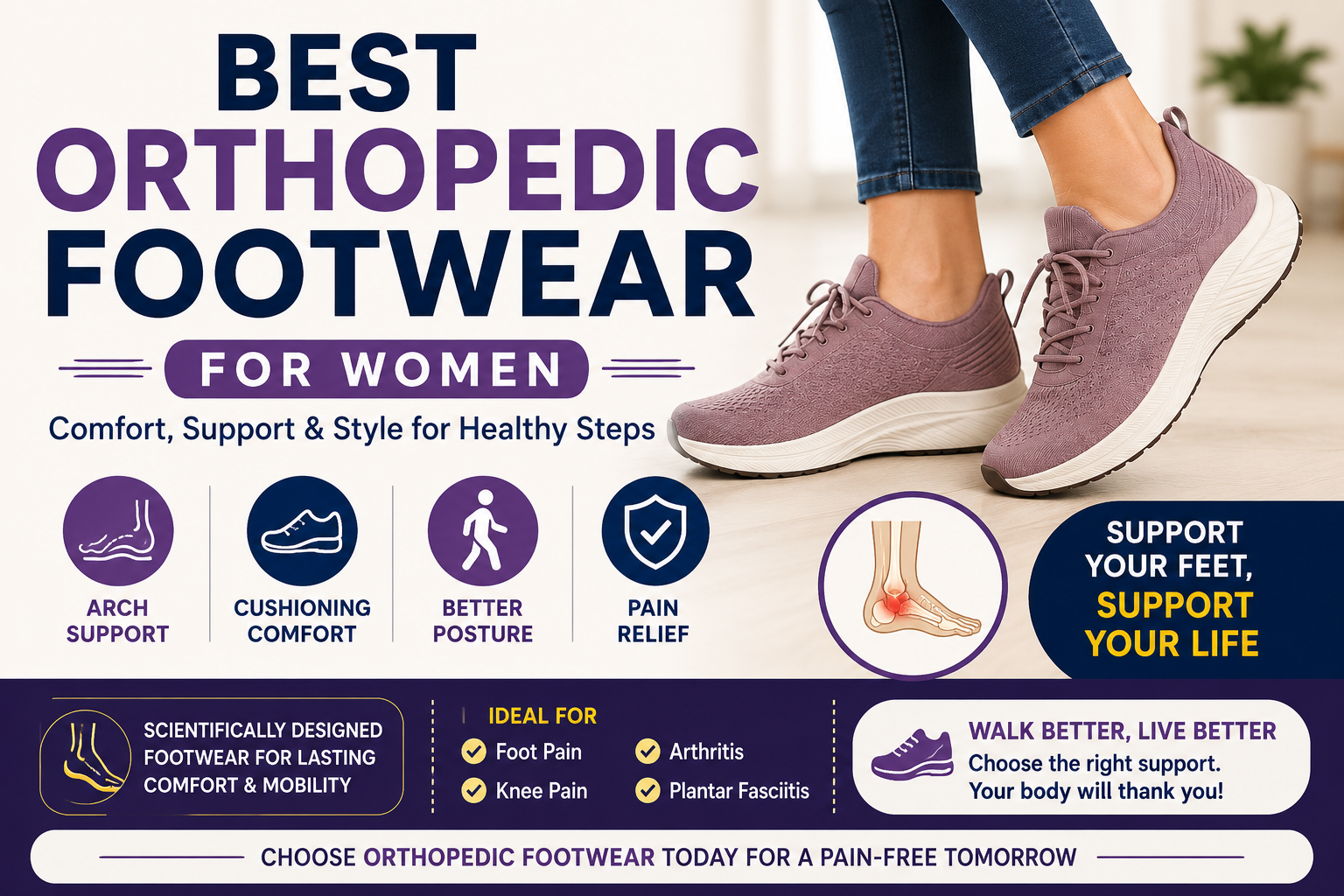
Comfortable Steps Begin with the Right Footwear
Finding the right footwear is already challenging — but when foot pain, knee discomfort, arthritis, or posture issues are involved, choosing shoes becomes even more important. The good news is that modern orthopedic footwear for women combines comfort, medical support, and style together.
According to orthopedic experts Dr. Shrikant Dalal and Dr. Snehal Dalal, the wrong footwear can worsen joint pain, increase pressure on the spine, and affect mobility over time. Proper orthopedic shoes help reduce stress on the feet while supporting healthy posture and movement.
In this guide, we’ll help you understand how orthopedic footwear works, what features matter most, and which types of shoes are best for different lifestyles and foot conditions.
Why Orthopedic Footwear Matters
Orthopedic footwear is specially designed to support the natural structure of the foot, improve balance, and reduce pressure on joints and muscles. Unlike regular shoes that focus mainly on appearance, orthopedic shoes prioritize long-term foot health and comfort.
Women who frequently experience foot pain, heel pain, bunions, arthritis, flat feet, or knee discomfort can significantly benefit from orthopedic footwear.
Benefits of Orthopedic Footwear for Women
- Improved arch support
- Better posture and spinal alignment
- Reduced knee and back strain
- Enhanced shock absorption
- Relief from heel pain and plantar fasciitis
- Improved comfort during long standing hours
- Reduced risk of foot injuries
Orthopedic shoes are also ideal for women who spend long hours walking, standing at work, traveling, or exercising regularly.
What Makes Orthopedic Footwear Different from Regular Shoes?
Orthopedic footwear is medically designed to support foot mechanics and distribute body weight evenly.
Key features include the following:
Advanced Arch Support
Proper arch support helps maintain the foot’s natural shape and reduces stress on joints and ligaments.
Cushioned Insoles
Soft cushioning absorbs shock while walking and minimizes impact on knees and hips.
Wide Toe Box
Extra space prevents pressure on toes and reduces discomfort caused by bunions or swelling.
Lightweight Construction
Lightweight materials improve mobility and reduce fatigue throughout the day.
Slip-Resistant Soles
Enhanced grip provides better stability and lowers the risk of falls.
Adjustable Fitting
Velcro straps, stretchable materials, or lace systems help accommodate swelling and different foot shapes.
Conditions That Benefit from Orthopedic Footwear
Orthopedic footwear is highly recommended for women suffering from:
- Plantar fasciitis
- Arthritis
- Flat feet
- Heel pain
- Bunions
- Diabetes-related foot sensitivity
- Knee pain
- Lower back pain
- Ankle instability
Experts often recommend supportive footwear as part of conservative orthopedic treatment before considering surgical options.
How the Wrong Footwear Affects Your Health
Wearing unsupportive footwear for long periods can negatively affect not just your feet, but your entire body.
Common problems caused by poor footwear include:
- Knee pain
- Back pain
- Poor posture
- Foot fatigue
- Joint inflammation
- Muscle imbalance
- Increased risk of falls and injuries
High heels, hard soles, and narrow shoes can especially increase pressure on joints and worsen orthopedic conditions.
Best Types of Orthopedic Footwear for Women
Orthopedic Walking Shoes
Walking shoes provide maximum cushioning and shock absorption, making them ideal for daily use and long walking hours.
Best For:
- Walking routines
- Travel
- Standing jobs
- Joint support
Orthopedic Sandals
Modern orthopedic sandals combine breathable comfort with excellent arch support.
Benefits:
- Lightweight feel
- Summer-friendly
- Comfortable for daily wear
- Good posture support
Orthopedic Slippers
Supportive slippers are important for indoor comfort, especially for elderly women or women with chronic foot pain.
Features:
- Anti-slip sole
- Memory foam cushioning
- Soft footbed support
Orthopedic Sports Shoes
Women involved in fitness activities require shoes that support movement while protecting joints from impact.
Recommended For:
- Gym workouts
- Running
- Yoga
- Exercise routines
Orthopedic Formal Footwear
Today’s orthopedic formal shoes are designed to look elegant while maintaining comfort and support.
Perfect for:
- Office wear
- Corporate professionals
- Long meetings
- Daily professional use
Expert Tips for Choosing the Right Orthopedic Shoes
According to Dr. Shrikant Dalal and Dr. Snehal Dalal, choosing orthopedic footwear should involve more than just style.
1. Measure Your Feet Properly
Foot size changes over time. Always measure both feet before buying shoes.
2. Shop in the Evening
Feet naturally swell throughout the day. Trying shoes later in the day ensures a more accurate fit.
3. Prioritize Comfort Immediately
Orthopedic shoes should feel comfortable from the first wear. They should not require a “break-in” period.
4. Check Arch Support
Arch support should match your foot type — flat feet, neutral arches, or high arches.
5. Look for Shock Absorption
Cushioned midsoles help reduce stress on knees, hips, and the spine.
Signs You Need Better Footwear
You may need orthopedic footwear if you experience the following:
- Foot pain after walking
- Heel discomfort in the morning
- Knee pain while climbing stairs
- Frequent swelling
- Burning sensation in feet
- Difficulty standing for long hours
- Lower back strain
Ignoring these symptoms can worsen orthopedic issues over time.
Footwear and Knee Health: The Hidden Connection
Improper footwear often contributes to knee pain and joint stress. Supportive shoes help maintain proper alignment and reduce pressure on knee joints.
Women with arthritis or age-related joint degeneration should pay special attention to footwear quality to avoid worsening symptoms.
Lifestyle Tips to Support Foot Health
Along with orthopedic footwear, maintaining healthy habits can improve mobility and reduce pain.
Helpful Habits Include:
- Maintaining healthy body weight
- Regular stretching exercises
- Avoiding prolonged standing
- Choosing supportive insoles
- Staying physically active
- Replacing worn-out shoes regularly
Frequently Asked Questions (FAQs)
Are orthopedic shoes only for elderly women?
No. Orthopedic footwear benefits women of all age groups who need additional comfort and support.
Can orthopedic footwear help with knee pain?
Yes. Proper footwear improves body alignment and reduces pressure on the knees.
How long should orthopedic shoes last?
Generally, orthopedic shoes should be replaced every 8–12 months depending on usage.
Are orthopedic shoes stylish?
Modern orthopedic footwear brands now offer fashionable designs without compromising support.
Final Thoughts
Healthy feet are the foundation of an active and pain-free life. The right orthopedic footwear can improve posture, reduce discomfort, support mobility, and prevent long-term orthopedic problems.
Whether you need supportive sandals, walking shoes, slippers, or sports footwear, investing in quality orthopedic shoes is an investment in your overall health.
Dr. Shrikant Dalal and Dr. Snehal Dalal emphasize that early attention to foot health can prevent major joint and mobility issues later in life.
If persistent foot, knee, or joint pain is affecting your daily routine, consult an orthopedic expert for proper evaluation and personalized guidance.
Consult Orthopedic Experts
Dr. Shrikant Dalal & Dr. Snehal Dalal
Expert Orthopedic Care & Joint Health Guidance
Book Your Consultation Today
Serving Patients with Advanced Orthopedic Care & Mobility Solutions
#OrthopedicFootwear #FootPainRelief #WomenFootCare #OrthopedicCare #KneePainRelief #HealthyFeet #JointHealth #FootSupport #MobilityCare #OrthopedicDoctor
